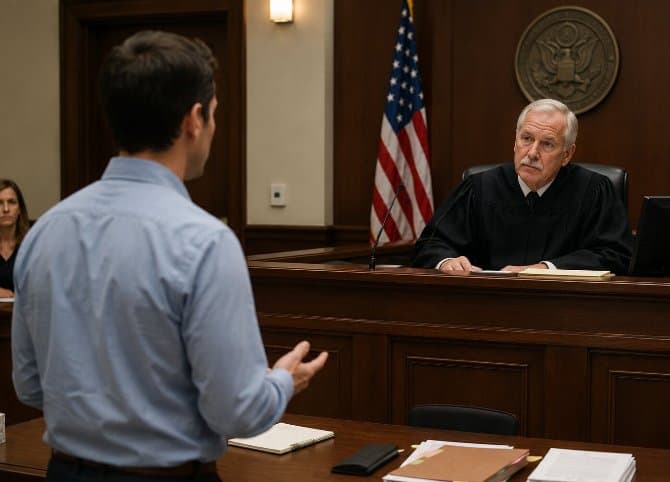
A missed test happens when the device does not receive a completed breath sample inside the scheduled window. Soberlink test windows commonly start fifteen minutes before the scheduled time and stay open for one to four hours, depending on the plan a court, employer, or treatment provider selected.
If a sample is not submitted before the window closes, the system logs the result as missed rather than compliant or non compliant.
This is different from a failed test, where a sample is submitted but shows alcohol above the set threshold. Missing a test and failing a test are two separate outcomes with different meanings attached to them, so the two should not be confused.
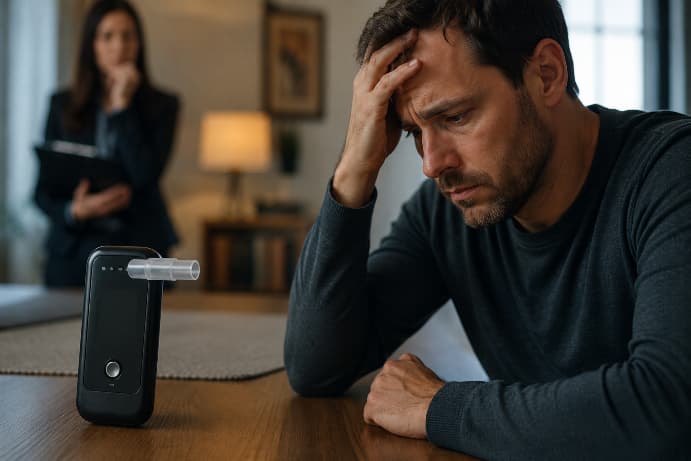
How Soberlink Reports a Missed Test
Soberlink uses a simple three color system so that anyone reviewing results can see the outcome at a glance.
Green means the test was submitted and compliant. Red means the test was submitted and showed alcohol above the threshold. Yellow means no test was submitted inside the window.
When a test is missed, the monitored person receives a text reminder. If they have an accountability partner, family member, or supervising officer set up as a contact, that person also receives a notification.
The exact timing and detail of these alerts depend on the reporting plan chosen, such as Basic, Plus, or Premium.
Check Also: How to Fight a Traffic Ticket Without Going to Court
What Happens Next in Family Court Custody Cases
In custody cases, what happens after a missed test depends on the parenting agreement or court order that put Soberlink in place.
Many California custody orders under Family Code Section 3100 treat a missed test as a trigger for an immediate consequence, such as losing that day’s visitation or having the child transferred to the other parent.
Family law attorneys who work with Soberlink regularly caution against treating every missed test as proof of drinking.
A missed test can result from forgetting the device, being unable to step away during a work meeting, or a personal emergency.
Courts and co parents are generally advised to ask for an explanation and consider adjusting the testing schedule before assuming the worst, though repeated missed tests can still lead to real consequences under the custody order.
What Happens Next in Probation and DUI Monitoring
For people on probation, pretrial release, or a court ordered DUI program, a missed test is usually treated the same way a failed test would be treated. The specific consequence depends on the supervising officer and the judge handling the case.
Possible outcomes include a follow up call from the supervising officer, a formal violation report, a modification of release conditions, or in more serious cases, revocation of conditional release.
If release is revoked, the person may be taken into custody until a judge reviews the case. Anyone facing this situation should contact their defense attorney right away rather than waiting to see if the missed test gets noticed.
What Happens Next in Voluntary and Workplace Monitoring
Not every Soberlink user is court ordered to test. Many people use the device voluntarily, as part of a recovery program, or as a condition set by an employer.
In these cases, the consequence of a missed test is whatever the monitored person and their accountability partner agreed on ahead of time.
Since there is no judge involved, the response to a missed test in a voluntary program is usually a conversation rather than a formal penalty.
Still, a pattern of missed tests can damage trust with the people relying on the results, which is often the whole point of using the device in the first place.
How to Handle a Missed Test the Right Way
If a test is missed, the recommended first step is to submit a test as soon as possible after realizing the window has closed. Waiting for someone else to bring it up rarely helps the situation.
The second step is to reach out proactively to whoever receives the results, whether that is a co parent, attorney, probation officer, or accountability partner. Explaining the reason before being asked shows accountability and often changes how the missed test is perceived.
The third step is to keep a simple written record of what happened and when, including any text messages or calendar entries that support the explanation. This record can matter later if the missed test becomes a topic in a custody hearing or probation review.
Conclusion
A missed Soberlink test is rarely as simple as a technical glitch in the eyes of a court or supervising officer.
What happens next depends on whether the testing is court ordered, part of probation, or entirely voluntary, but in nearly every context the response that helps most is the same.
Retest as soon as possible, explain the reason to the people watching the results, and keep a record in case it comes up again later.