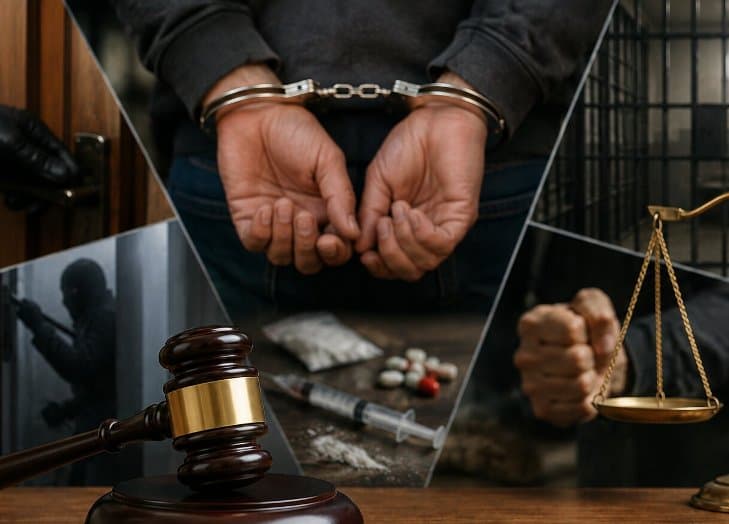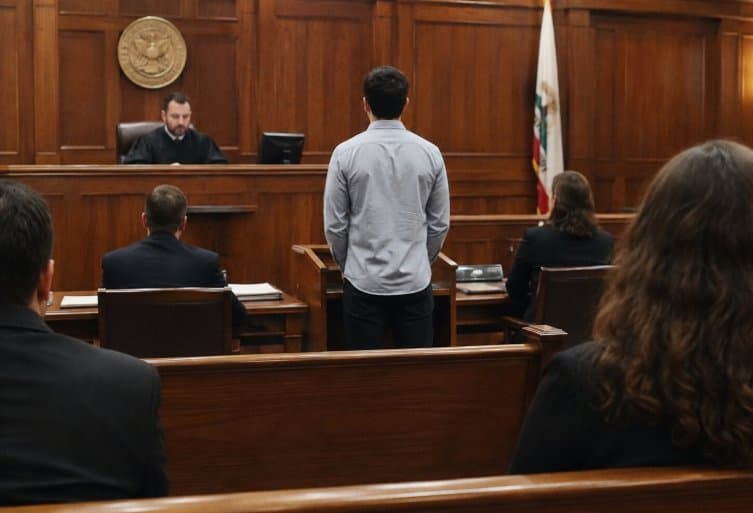
An evidentiary hearing is a court proceeding held before a judge, without a jury, where both sides present evidence and testimony so the judge can decide a specific factual or legal question in a criminal case.
It is not the trial itself. It is a focused session that usually happens before trial, though it can also happen after a conviction in certain situations.
What Is an Evidentiary Hearing?
An evidentiary hearing is a formal session in which the prosecution and defense present evidence, call witnesses, and argue a specific legal issue in front of a judge.
The judge alone decides the outcome. There is no jury present, and the hearing does not determine guilt or innocence.
The format looks similar to a small trial. Witnesses testify under oath and can be cross examined by the opposing side.
The judge weighs credibility, reviews documents such as police reports or warrants, and applies the relevant legal standard to reach a ruling.
These hearings exist because some questions in a criminal case are about process and legality rather than about what happened on the night of the alleged crime.
A judge needs to know, for example, whether police had a valid warrant before deciding whether the jury ever gets to see what that search turned up.
When Does an Evidentiary Hearing Happen in a Criminal Case?
An evidentiary hearing most often happens before trial, when the defense challenges how the prosecution obtained its evidence.
It can also happen after a conviction, during probation proceedings, or in a postconviction appeal.
Common causes include:
- A motion to suppress evidence obtained during a search or arrest that may have violated the Fourth Amendment.
- A Franks hearing, where the defense argues that a search warrant affidavit contained a deliberate or reckless false statement.
- A challenge to a confession or statement, often tied to Miranda warnings or the Fifth and Sixth Amendments.
- A probation or parole violation hearing, where the state must prove a violation by a preponderance of the evidence.
- A competency hearing, to decide whether a defendant is mentally fit to stand trial.
- A postconviction or habeas corpus proceeding, where new evidence or a claim of ineffective counsel is at issue.
How an Evidentiary Hearing Works?
Most evidentiary hearings follow a predictable sequence, whether the issue is a search, a confession, or a probation violation. Here is what to expect from filing to ruling.
- A motion is filed. One side, usually the defense, files a written motion asking the court to hold a hearing on a specific issue, such as suppressing evidence from a car search.
- The court sets a hearing date. If the motion raises a genuine factual dispute, the judge schedules the hearing rather than ruling on paperwork alone.
- Each side presents evidence. Witnesses, often police officers, testify under oath. Attorneys may introduce documents, warrants, body camera footage, or lab reports.
- Cross examination happens. The opposing attorney questions each witness to test their account and credibility.
- Attorneys make legal arguments. After the evidence is in, both sides argue how the facts apply to the relevant legal standard.
- The judge rules. The judge issues a decision, sometimes immediately and sometimes in a written order days or weeks later.
Check More: What Happens When You Go to Court for Petty Theft?
Types of Evidentiary Hearings in Criminal Cases
Evidentiary hearings can take several forms, depending on the legal issue being raised and the stage of the criminal case.
Motion to Suppress Hearing
This is the most common evidentiary hearing in criminal cases. The defense argues that police violated the defendant’s constitutional rights during a search, seizure, or interrogation.
The defendant first has to show that a search or seizure occurred without a warrant or clear justification.
Once that threshold is met, the burden shifts to the prosecution to prove by a preponderance of the evidence that the search was lawful.
If the judge grants the motion, the evidence in question, and often anything discovered because of it, cannot be used at trial under the fruit of the poisonous tree doctrine.
Franks Hearing
A Franks hearing addresses whether a search warrant was based on false or reckless statements.
If a defendant can show that removing the false parts of the affidavit leaves it without probable cause, the court can suppress the evidence obtained under that warrant.
Competency Hearing
A competency hearing determines whether a defendant currently understands the charges against them and can assist in their own defense.
This is separate from an insanity defense, which concerns the defendant’s mental state at the time of the alleged crime.
Probation or Parole Violation Hearing
When someone is accused of violating probation, the state does not need to prove the violation beyond a reasonable doubt.
The standard is much lower, a preponderance of the evidence, meaning it is more likely than not that the violation occurred.
Postconviction and Habeas Corpus Hearings
After a conviction, a defendant can sometimes request an evidentiary hearing to present new evidence, such as proof of ineffective assistance of counsel or newly discovered facts that were not available at trial.
What Happens After an Evidentiary Hearing?
The judge’s ruling shapes what the jury will and will not see at trial. If evidence is suppressed, prosecutors may lose a central piece of their case, which can lead to reduced charges, a plea agreement, or in some cases a dismissal. If the motion is denied, the case proceeds to trial with the evidence intact.
Either outcome can also affect settlement talks. Once both sides see how a judge ruled on the strength of the evidence, they often have a clearer sense of how a jury trial might go, which is one reason cases sometimes resolve shortly after an evidentiary hearing.
Conclusion
An evidentiary hearing gives a judge, not a jury, the chance to settle a specific factual question before a criminal case goes further.
Most often, that question is whether evidence was obtained legally. The outcome can reshape the entire case, from what the jury is allowed to see to whether the case settles or goes to trial at all.
If you are facing a criminal charge and a hearing like this is on the calendar, talk with a criminal defense attorney about the specific motion involved and what standard of proof applies in your jurisdiction.